

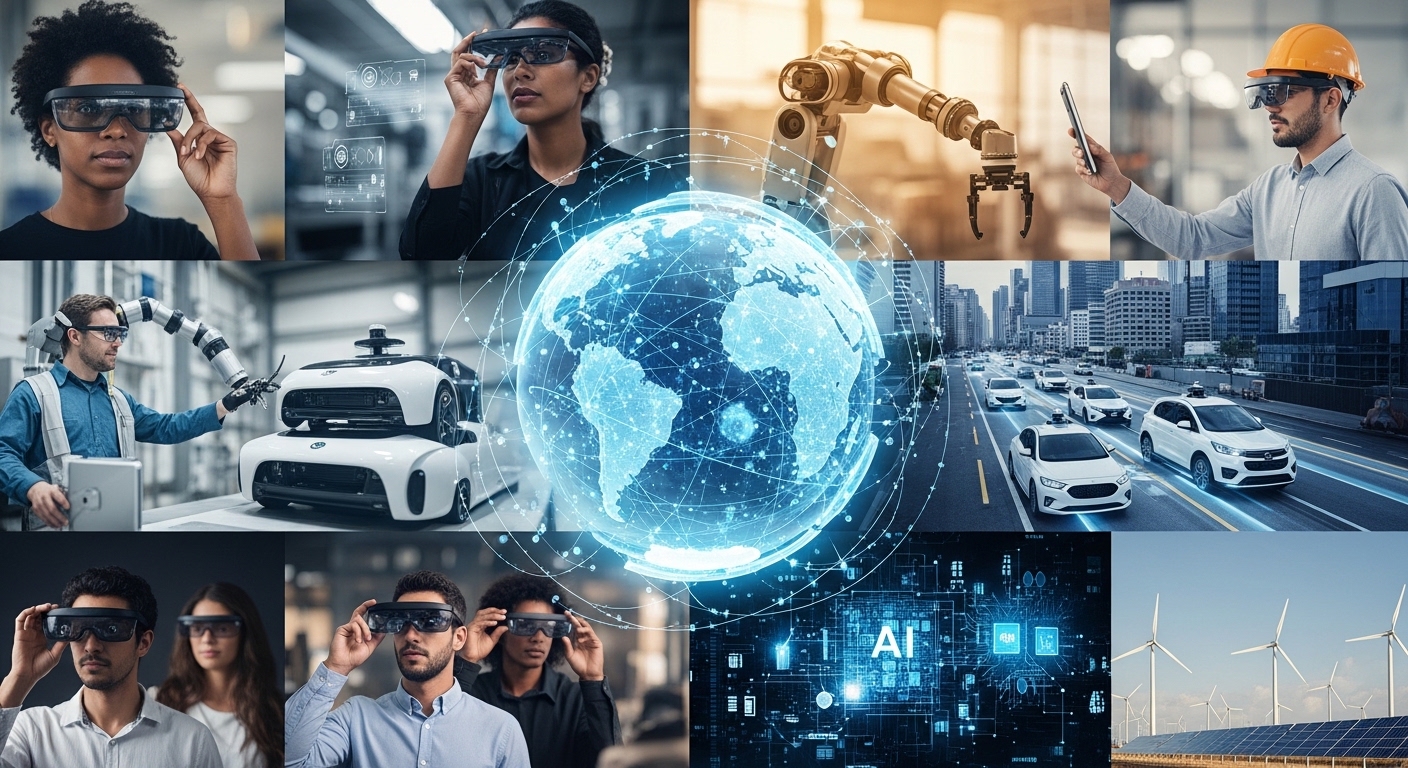
Technology is advancing at an incredible speed, reshaping how people live, work, communicate, and solve problems. From artificial intelligence and automation to quantum computing and smart connectivity, modern innovations are transforming industries and everyday life. These technology trends are building a more intelligent, efficient, and interconnected world where digital systems play a central role in global development and future progress.
Artificial Intelligence Expansion Trends
AI Powered Automation Growth
Artificial intelligence is increasingly being used to automate repetitive and complex tasks across industries. Businesses use AI systems for customer support, data analysis, and workflow optimization. This reduces costs, improves accuracy, and increases productivity, making AI a core driver of modern digital transformation worldwide.
Generative AI Content Creation Systems
Generative AI tools are creating text, images, videos, and code in seconds. These systems are transforming industries like marketing, entertainment, and education by reducing production time and increasing creativity. They allow individuals and businesses to generate high quality digital content with minimal effort.
AI Driven Decision Making Tools
AI systems analyze large datasets to provide insights and recommendations for better decision making. This technology is widely used in healthcare, finance, and business planning. It helps organizations reduce risks and make faster, more accurate strategic choices.
Natural Language Processing Advances
Natural language processing enables machines to understand and respond to human language more effectively. It powers chatbots, translation tools, and voice assistants. This improves communication between humans and machines, making digital interaction smoother and more accessible globally.
Personalized AI Experience Systems
AI personalization systems analyze user behavior to deliver customized content and recommendations. This improves user engagement on platforms like streaming services, e commerce, and social media. It enhances digital experiences by making them more relevant and user focused.
Internet of Things (IoT) Revolution
Smart Home Automation Systems
IoT technology connects home devices such as lights, thermostats, and security systems. Users can control everything remotely through smartphones. This improves convenience, energy efficiency, and home security in modern living environments.
Industrial IoT Transformation Growth
Industries use IoT to monitor machines, track performance, and improve productivity. This reduces downtime and supports predictive maintenance. It helps factories become smarter and more efficient in global manufacturing systems.
Smart City Infrastructure Development
Smart cities use connected sensors and digital systems to manage traffic, energy, and public services. This improves urban living conditions and reduces resource waste. It supports sustainable development in rapidly growing cities worldwide.
Connected Healthcare Devices Expansion
IoT healthcare devices monitor patient health in real time through wearable technology. Doctors can track vital signs remotely, improving diagnosis and treatment. This enhances healthcare efficiency and patient care globally.
Smart Agriculture Technology Systems
IoT in agriculture helps farmers monitor soil, weather, and crops. This increases productivity and reduces resource waste. Smart farming supports sustainable food production and better agricultural management worldwide.
Cloud and Edge Computing Trends
Cloud Storage and Computing Growth
Cloud computing allows users to store data and run applications online. It improves flexibility, scalability, and remote access. Businesses rely on cloud systems for efficient digital operations and data management.
Edge Computing Performance Improvement
Edge computing processes data closer to the source instead of centralized servers. This reduces delay and improves speed for real time applications. It is essential for IoT, AI, and smart devices.
Hybrid Cloud Infrastructure Adoption
Organizations are combining private and public cloud systems for better control and efficiency. This hybrid approach improves security, flexibility, and performance in digital operations.
Serverless Computing Technology Growth
Serverless computing allows developers to build applications without managing servers. It reduces costs and simplifies deployment, improving software development efficiency.
High Performance Computing Systems
High performance computing processes large data sets quickly for scientific research and simulations. It supports innovation in medicine, engineering, and space exploration.
Cybersecurity and Digital Protection Trends
AI Based Cybersecurity Systems
AI detects cyber threats in real time by analyzing network activity. It helps prevent attacks and strengthens digital protection systems across industries worldwide.
Blockchain Security Technology Growth
Blockchain provides secure, transparent, and decentralized data systems. It is widely used in finance, supply chains, and digital identity protection.
Biometric Authentication Expansion
Biometric systems use fingerprints, facial recognition, and iris scans for secure access. This improves digital security and reduces identity fraud risks.
Data Privacy Protection Systems
Advanced encryption and privacy tools protect sensitive information from cyber threats. This ensures safe communication and data handling in digital environments.
Zero Trust Security Models
Zero trust security requires continuous verification of users and devices. It reduces vulnerabilities and strengthens protection against cyberattacks in modern networks.
Communication Technology Evolution Trends
5G Network Expansion Growth
5G technology provides faster internet speeds and lower latency. It supports smart devices, streaming, and advanced communication systems globally.
Satellite Internet Connectivity Growth
Satellite internet improves connectivity in remote areas. It expands global internet access and supports communication in underserved regions.
Real Time Translation Technology
AI translation tools enable instant language conversion. This improves global communication and cross cultural interaction.
Smart Communication Platforms Growth
Modern communication apps integrate AI, encryption, and multimedia features. They enhance messaging, collaboration, and digital interaction.
Video Conferencing Technology Improvement
Advanced video conferencing tools support remote work and online education with high quality communication features.
Robotics and Automation Trends
Industrial Robotics Expansion Growth
Robots are widely used in manufacturing to improve speed, accuracy, and efficiency. They reduce human workload and increase productivity.
AI Powered Service Robots
Service robots assist in healthcare, hospitality, and customer service. They improve efficiency and reduce operational costs.
Autonomous Vehicle Development Progress
Self driving vehicles use AI and sensors to navigate safely. They are transforming transportation systems globally.
Warehouse Automation Systems Growth
Automated systems improve logistics by managing inventory and order processing efficiently in warehouses.
Humanoid Robot Innovation Development
Humanoid robots are being developed for human interaction, assistance, and service tasks in various industries.
Emerging Future Technology Trends
Quantum Computing Development Growth
Quantum computers solve complex problems faster than traditional systems. They will transform science, security, and data processing.
Metaverse Digital Ecosystem Expansion
The metaverse combines virtual reality, social interaction, and digital economies into immersive online worlds.
Brain Computer Interface Systems
These systems allow direct communication between the brain and machines, improving accessibility and control.
Augmented Reality Integration Growth
AR blends digital content with the real world, enhancing learning, shopping, and entertainment experiences.
Sustainable Green Technology Solutions
Green technology focuses on reducing environmental impact while improving energy efficiency and sustainability.
FAQs
What are the latest technology trends today?
AI, IoT, cloud computing, robotics, and cybersecurity are major trends.
How is AI changing the world?
AI improves automation, decision making, communication, and productivity.
What is the future of digital technology?
It includes smarter AI systems, quantum computing, and immersive digital worlds.
Why is cybersecurity important?
It protects data, systems, and users from cyber threats and attacks.
How does IoT improve daily life?
IoT connects devices to improve convenience, efficiency, and automation.
Conclusion
Latest technology trends are transforming the world into a smarter, faster, and more connected digital ecosystem. From artificial intelligence and IoT to cybersecurity and robotics, these innovations are reshaping industries and everyday life. As technology continues to evolve, it will create new opportunities, improve global efficiency, and drive future development across all sectors of modern society worldwide.