

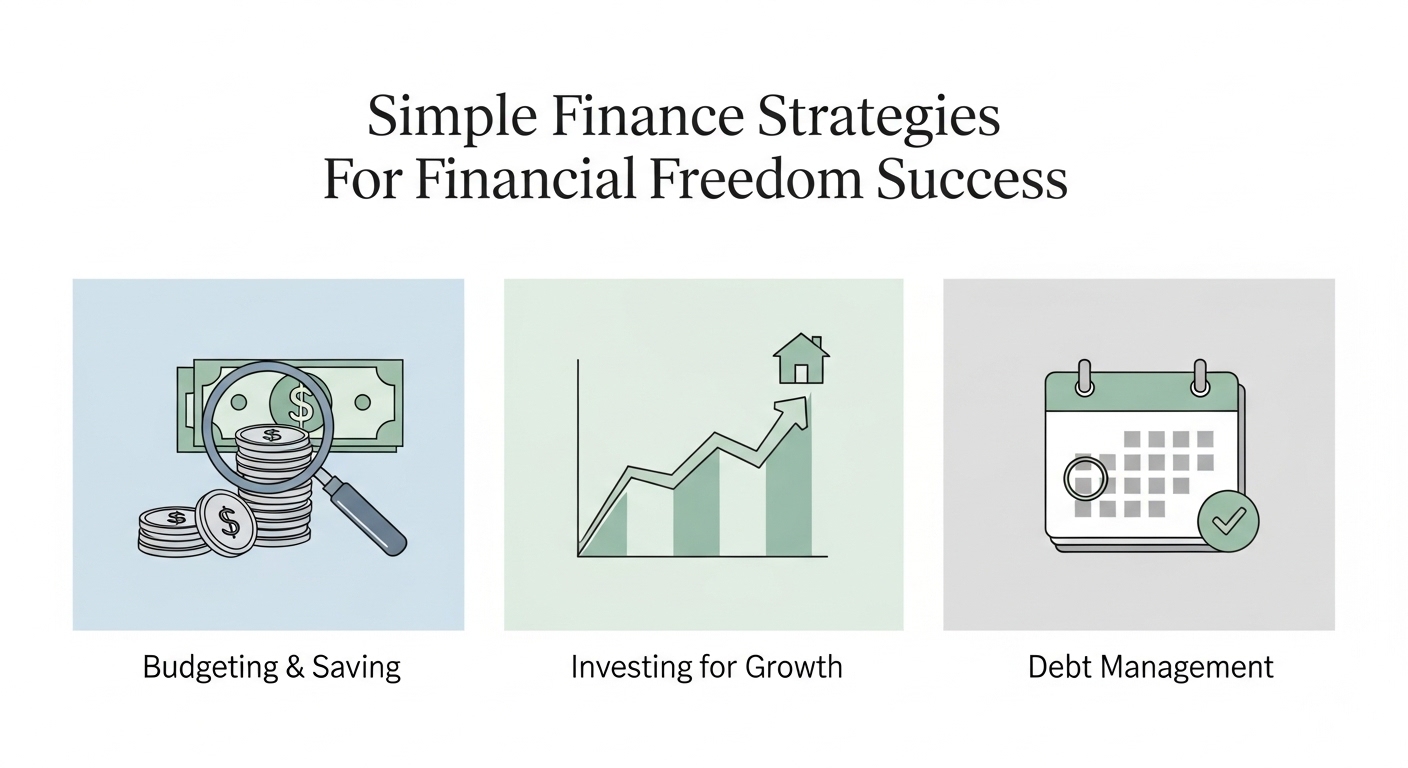
Simple finance strategies are the foundation of achieving financial freedom and long-term success. By developing disciplined money habits, managing income wisely, and making smart investment decisions, anyone can build stability and independence. Financial freedom is not achieved overnight—it comes from consistent actions that improve savings, reduce debt, and grow wealth steadily over time.
Smart Budgeting Foundations
Tracking Monthly Income
Tracking monthly income helps you understand exactly how much money you earn and how it flows each month. This awareness improves financial control and helps identify opportunities for saving and investing. When income is clearly tracked, financial planning becomes more accurate and effective for long-term success.
Creating Simple Budgets
A simple budget organizes your income into essential categories like needs, savings, and investments. It prevents overspending and helps maintain financial balance. Budgeting also provides clarity and direction, making it easier to achieve financial freedom goals step by step.
Controlling Daily Expenses
Controlling daily expenses ensures that unnecessary spending does not affect long-term financial growth. Small expenses can accumulate over time, so monitoring them carefully helps improve savings. This habit strengthens discipline and supports financial stability.
Planning Financial Priorities
Financial priorities help you decide where your money should go first. Essential needs, savings, and investments should always come before unnecessary spending. Prioritizing finances ensures steady progress toward financial independence and long-term success.
Reviewing Financial Progress
Regularly reviewing financial progress helps you understand what is working and what needs improvement. It allows adjustments in budgeting, saving, and investing strategies. This habit ensures continuous growth toward financial freedom.
Effective Saving Strategies
Building Emergency Funds
An emergency fund provides financial security during unexpected situations like medical emergencies or job loss. It prevents debt and ensures stability. Having savings ready reduces stress and supports long-term financial confidence.
Saving Automatically
Automating savings ensures a portion of income is saved before spending begins. This creates consistency and builds wealth effortlessly over time. It is one of the most effective strategies for financial discipline.
Reducing Extra Spending
Cutting unnecessary expenses frees up money for savings and investments. It encourages mindful spending habits and improves financial control. Small reductions in daily spending can lead to significant long-term savings.
Using Savings Accounts Wisely
High-interest savings accounts help grow money safely over time. They provide better returns than regular accounts while keeping funds accessible. This strategy supports steady financial growth with low risk.
Setting Saving Goals
Clear saving goals give direction and motivation to manage money better. Whether short-term or long-term, goals help maintain focus and discipline. They make financial freedom more achievable and structured.
Smart Investment Strategies
Starting Early Investments
Starting investments early allows money to grow through compound interest over time. Even small investments can turn into significant wealth. Early investing reduces financial pressure in the future.
Diversifying Investments
Diversification spreads money across different assets to reduce risk. It protects your wealth from market fluctuations and increases stability. A diversified portfolio improves long-term financial security.
Understanding Investment Basics
Understanding how investments work helps you make smarter financial decisions. It reduces risk and increases chances of success. Knowledge is essential for building long-term wealth.
Long-Term Investment Thinking
Long-term investing focuses on steady growth instead of quick profits. It reduces emotional decisions and market stress. This strategy is key to building sustainable financial freedom.
Reinvesting Profits
Reinvesting profits helps your money grow faster through compounding. Instead of spending earnings, reinvestment multiplies wealth over time. It is a powerful strategy for financial independence.
Income Growth Methods
Building Multiple Income Streams
Multiple income sources increase financial security and reduce dependency on one job. They provide additional savings and investment opportunities. This accelerates financial freedom.
Improving Skill Sets
Developing new skills increases earning potential and career opportunities. Higher skills often lead to higher income. Continuous learning supports long-term financial success.
Starting Side Businesses
Side businesses generate extra income outside regular jobs. They provide financial flexibility and independence. Over time, they can become major income sources.
Freelancing Opportunities
Freelancing allows flexible income based on skills and time. It provides global opportunities and additional earnings. Freelancing supports financial growth and independence.
Increasing Salary Income
Negotiating salary increases ensures income grows with experience and skills. Higher income directly supports faster savings and investment growth. It is a key financial strategy.
Debt Management Techniques
Paying High Interest Debt
Paying off high-interest debt first reduces financial burden quickly. It saves money and improves financial health. This strategy helps regain control over finances.
Avoiding Unnecessary Loans
Avoiding unnecessary loans prevents long-term financial stress. It protects financial freedom and stability. Responsible borrowing is essential for success.
Using Credit Carefully
Smart credit usage builds financial reputation and avoids debt traps. It ensures better control over spending. Responsible credit habits support financial growth.
Consolidating Debts
Debt consolidation simplifies payments and may reduce interest rates. It helps manage multiple debts efficiently. This improves financial organization and reduces stress.
Creating Repayment Plans
Structured repayment plans ensure consistent debt clearance. They improve discipline and financial control. This helps achieve financial freedom faster.
Financial Mindset Development
Practicing Discipline
Financial discipline ensures consistent saving and smart spending habits. It prevents emotional decisions. Discipline is the foundation of financial freedom.
Avoiding Lifestyle Inflation
Avoiding lifestyle inflation helps maintain savings even when income increases. It prevents unnecessary spending. This accelerates wealth building significantly.
Learning Financial Skills
Financial education improves decision-making and investment success. It reduces mistakes and increases opportunities. Knowledge is essential for financial independence.
Thinking Long Term
Long-term thinking helps focus on stable financial growth. It reduces risky decisions and improves planning. This is key to financial freedom.
Staying Consistent
Consistency in financial habits ensures steady progress toward goals. Small daily actions create long-term success. Consistency is more powerful than motivation.
FAQs
What is financial freedom?
Financial freedom means having enough savings and income to live without financial stress.
How can I achieve financial freedom faster?
Saving regularly, investing early, and building multiple income sources help achieve it faster.
Why is budgeting important?
Budgeting helps control spending and increases savings for investments.
Is investing necessary for financial success?
Yes, investing helps grow money and build long-term wealth.
Can small savings make a difference?
Yes, consistent small savings grow significantly over time.
Conclusion
Simple finance strategies are essential for achieving financial freedom and long-term success. By budgeting wisely, saving consistently, investing early, and building multiple income streams, anyone can improve financial stability. Discipline, patience, and smart decisions are key to wealth building. Over time, these habits create independence, security, and lasting financial success for a better future.
